MoveIt - A Dual-Platform Fitness Tracking Experience
MoveIt - A Dual-Platform Fitness Tracking Experience
Designing a connected fitness app for mobile and smartwatch to help busy professionals stay active and track heart health.
Project Type
Short case study
Duration
1 week
Collaborator
Sarah Kellner
My Role
UX/UI Designer
Main Tools
Figma, Miro, Excalidraw
Project Type
Short case study
Duration
1 week
Collaborator
Sarah Kellner
My Role
UX/UI Designer
Main Tools
Figma, Miro, Excalidraw
Project Type
Short case study
Duration
1 week
Collaborator
Sarah Kellner
My Role
UX/UI Designer
Main Tools
Figma, Miro, Excalidraw
The challenge
Busy professionals want to maintain a workout routine but struggle to find time.
Our challenge was to design a simple, connected fitness tracking experience across mobile and smartwatch platforms for encouraging consistent activity and effortlessly tracking heart health.
Understanding the user
Understanding the user
User persona: Jarno Lindeman, 42, Design Manager, Berlin
Needs: Stay active despite busy schedule, track heart health
Pain points: Forgetting workouts, fragmented fitness data
Goal: Consistent, easy-to-access tracking via phone + watch
Scenario: Jarno uses MoveIt to complete short workouts at home or while traveling, seamlessly tracking progress between devices.
User persona: Jarno Lindeman, 42, Design Manager, Berlin
Needs: Stay active despite busy schedule, track heart health
Pain points: Forgetting workouts, fragmented fitness data
Goal: Consistent, easy-to-access tracking via phone + watch
Scenario: Jarno uses MoveIt to complete short workouts at home or while traveling, seamlessly tracking progress between devices.
User persona: Jarno Lindeman, 42, Design Manager, Berlin
Needs: Stay active despite busy schedule, track heart health
Pain points: Forgetting workouts, fragmented fitness data
Goal: Consistent, easy-to-access tracking via phone + watch
Scenario: Jarno uses MoveIt to complete short workouts at home or while traveling, seamlessly tracking progress between devices.
Process Highlights
Process Highlights
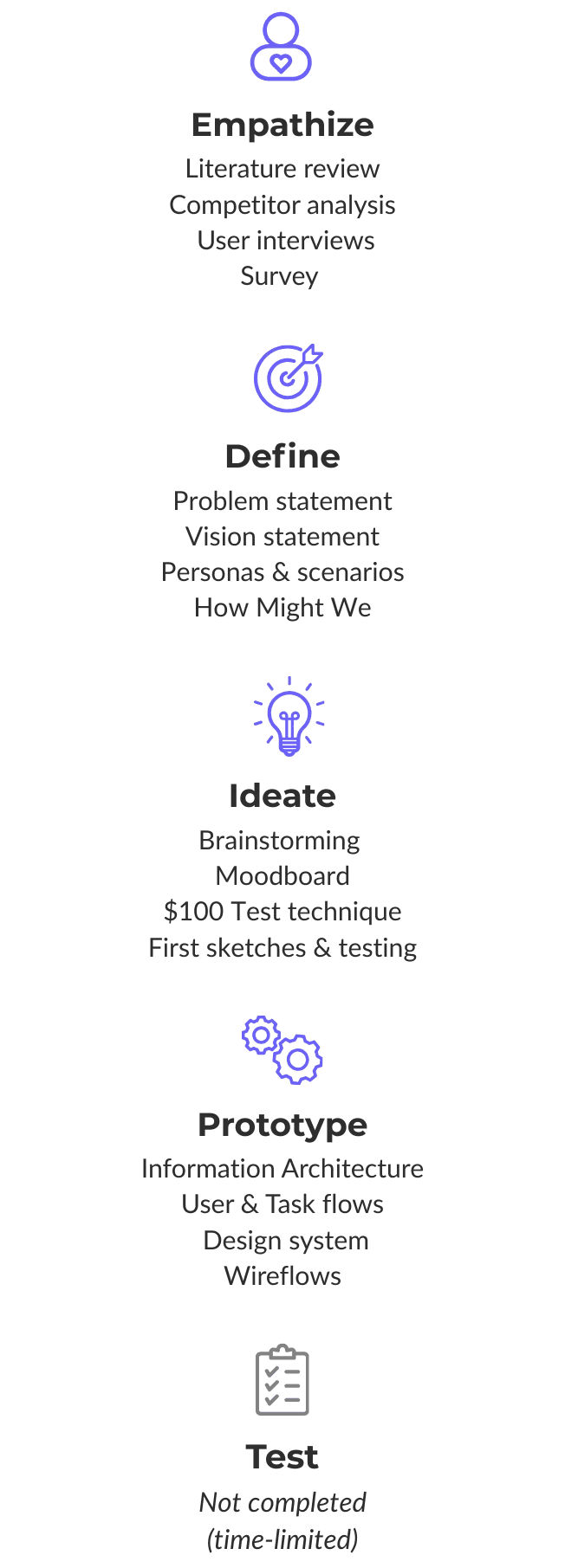
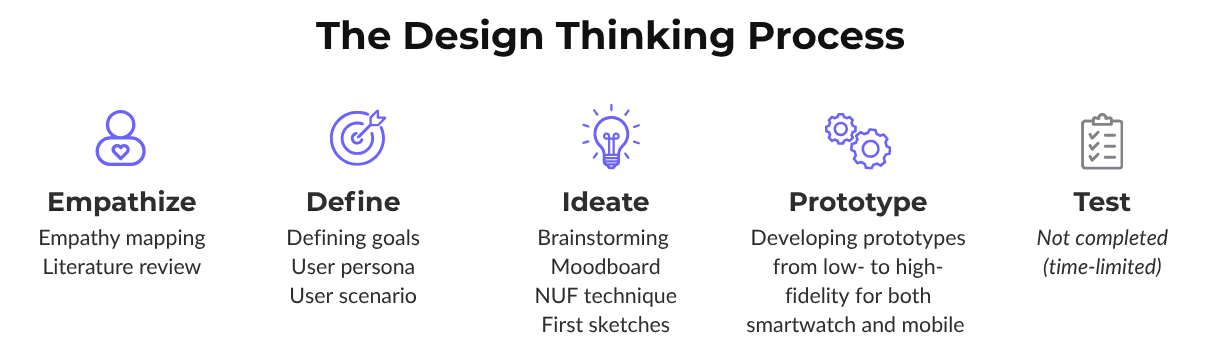
The Design Thinking Process
Research & Ideation
Since this project was very time-limited, we briefly explored users' fitness motivations and smartwatch habits through literature review.
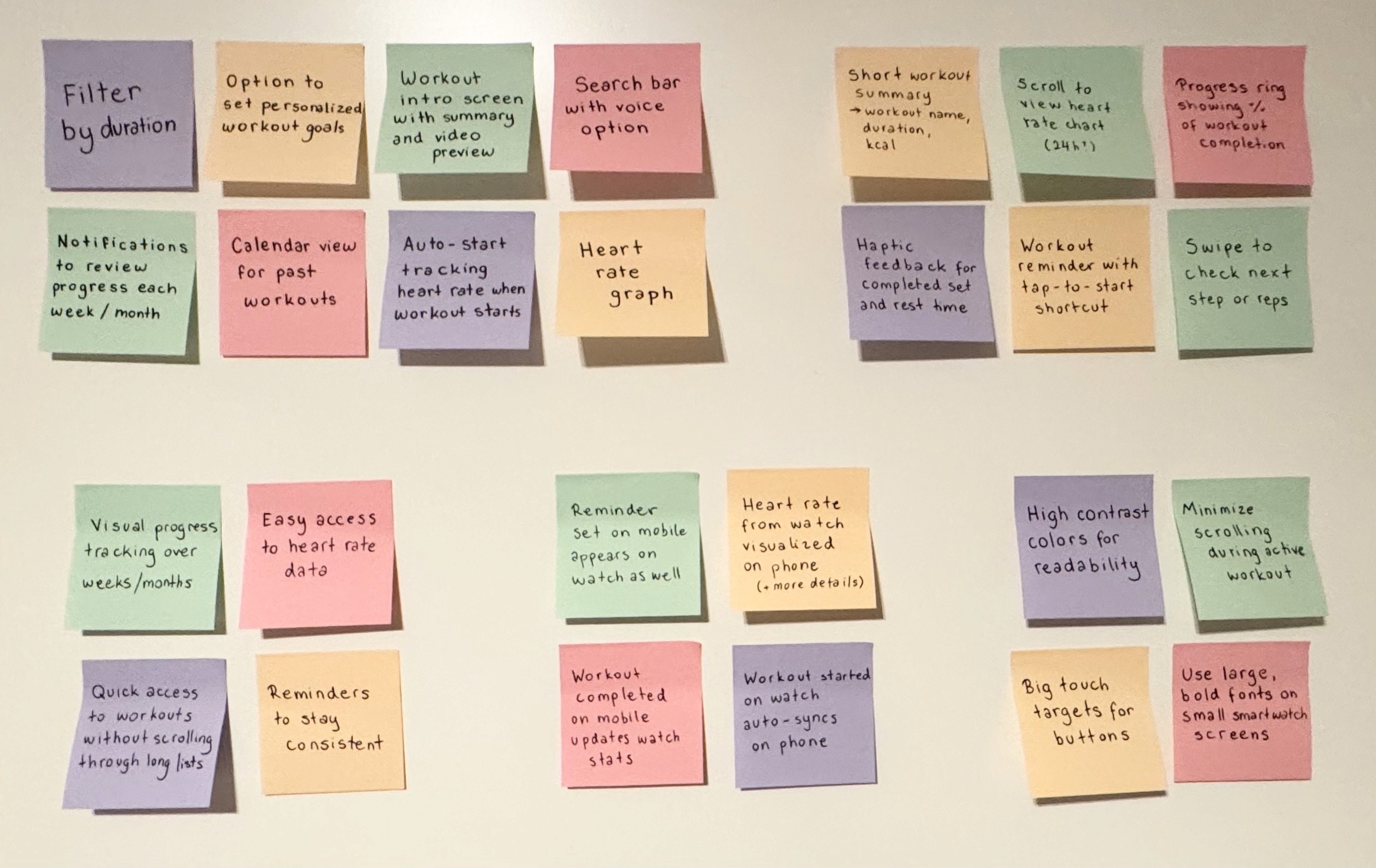
During the ideation phase, we created a mood board and brainstormed ideas using Miro and sticky notes.
After considering all the ideas, we used NUF technique (New, Useful and Feasible) to select the most promising solution.
Sketching
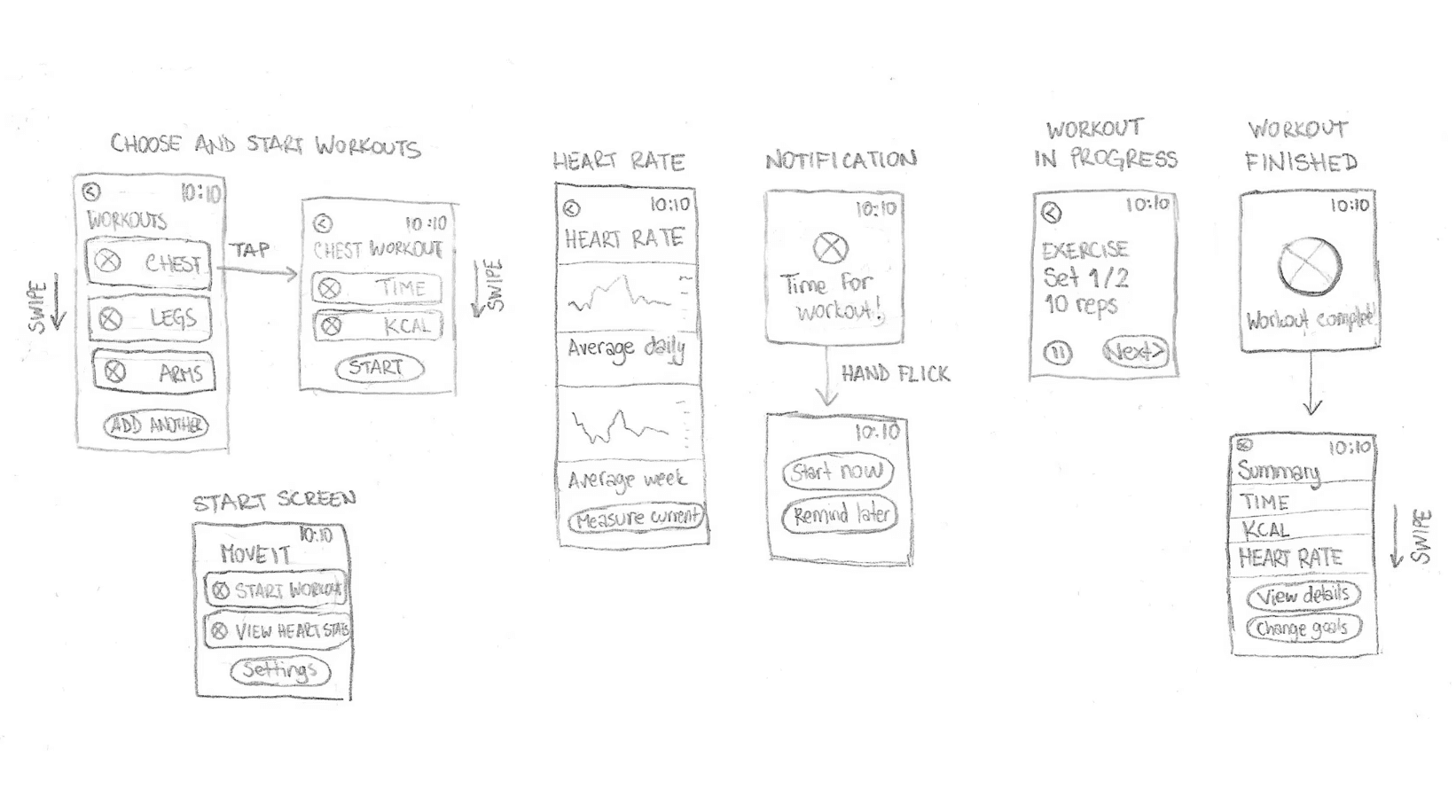
After creating user flow diagrams, we began sketching smartwatch screens, in order to define key elements on a small screen first. Then, we expanded the design onto mobile screens.
Prototyping
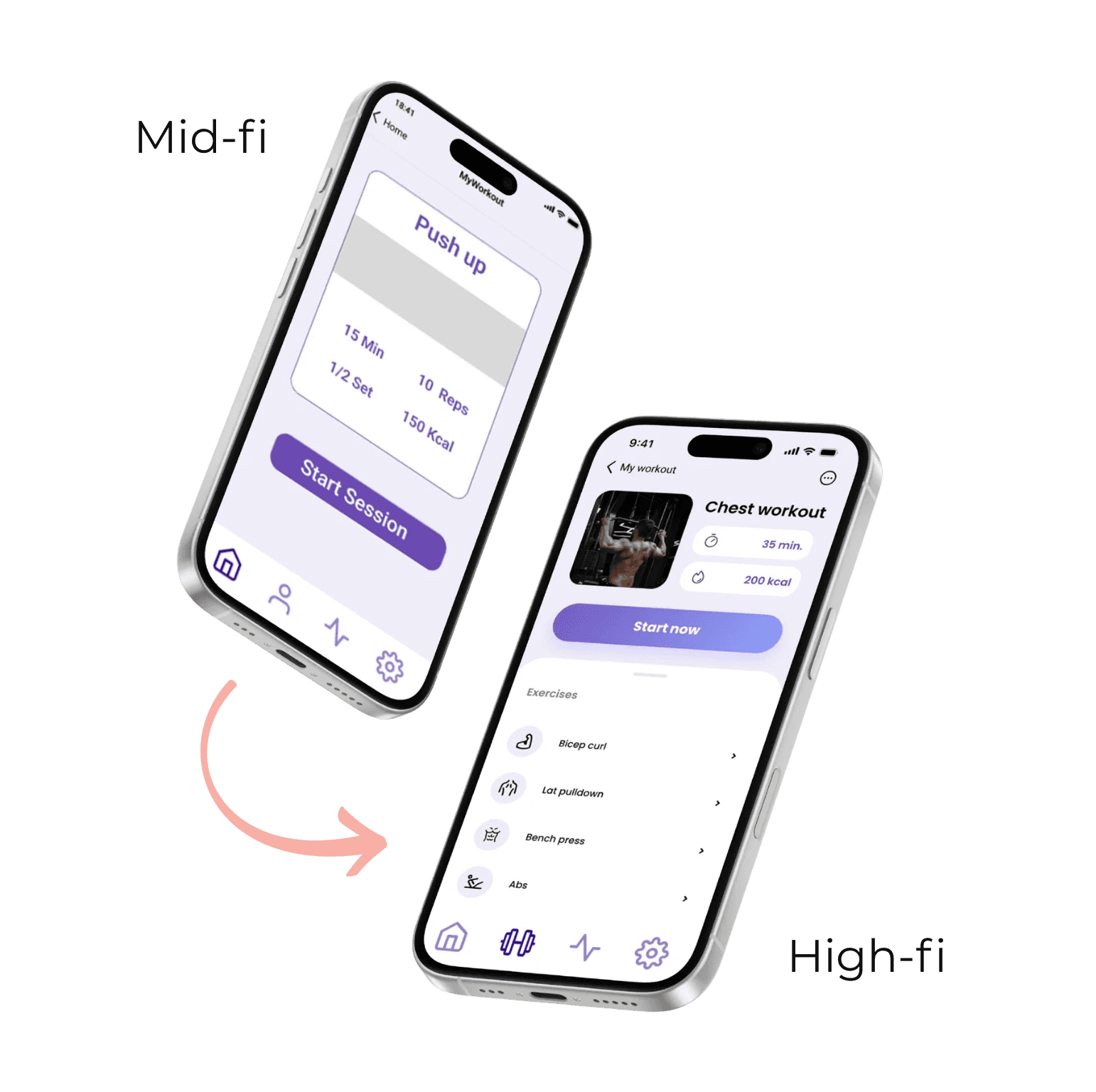
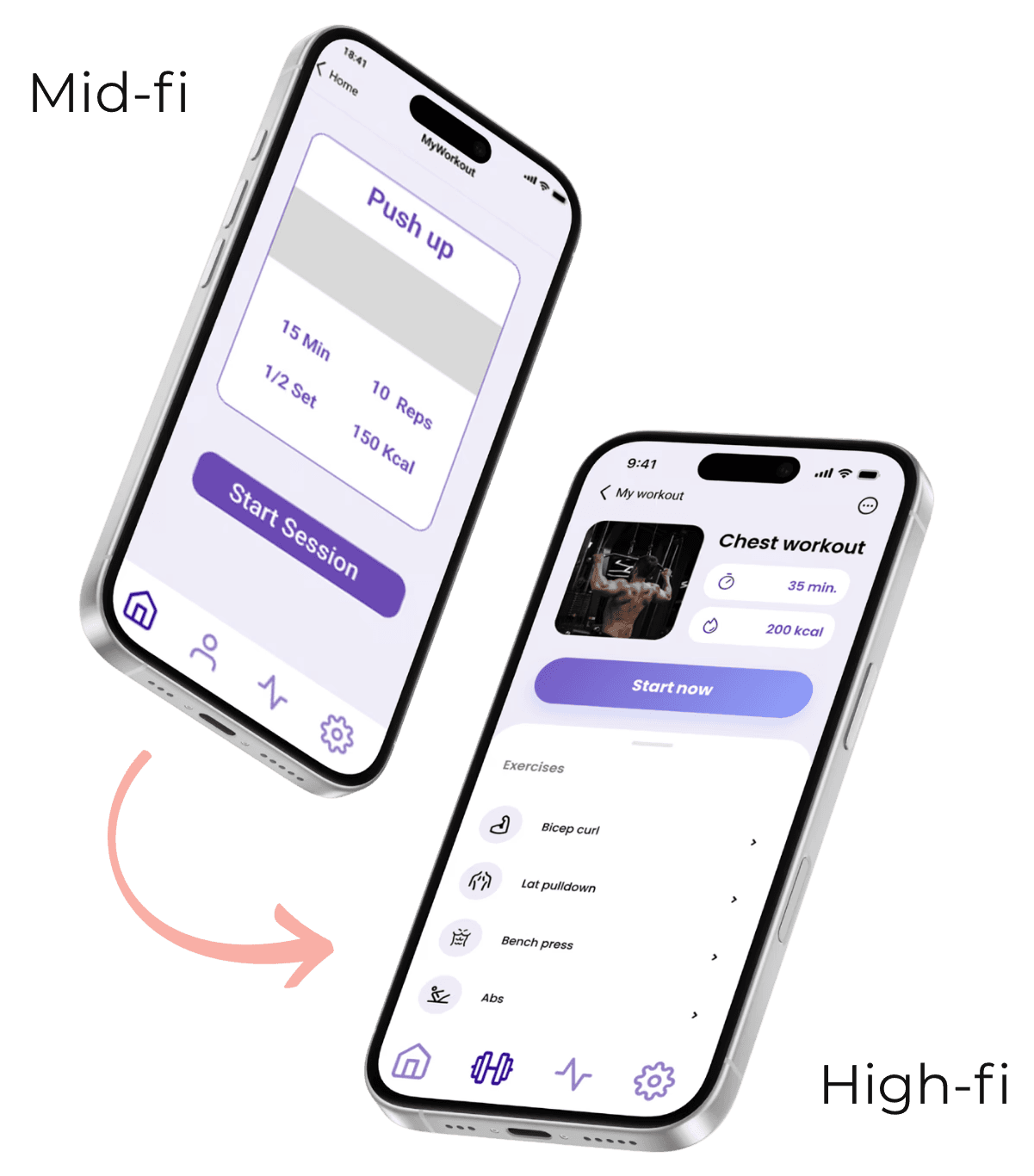
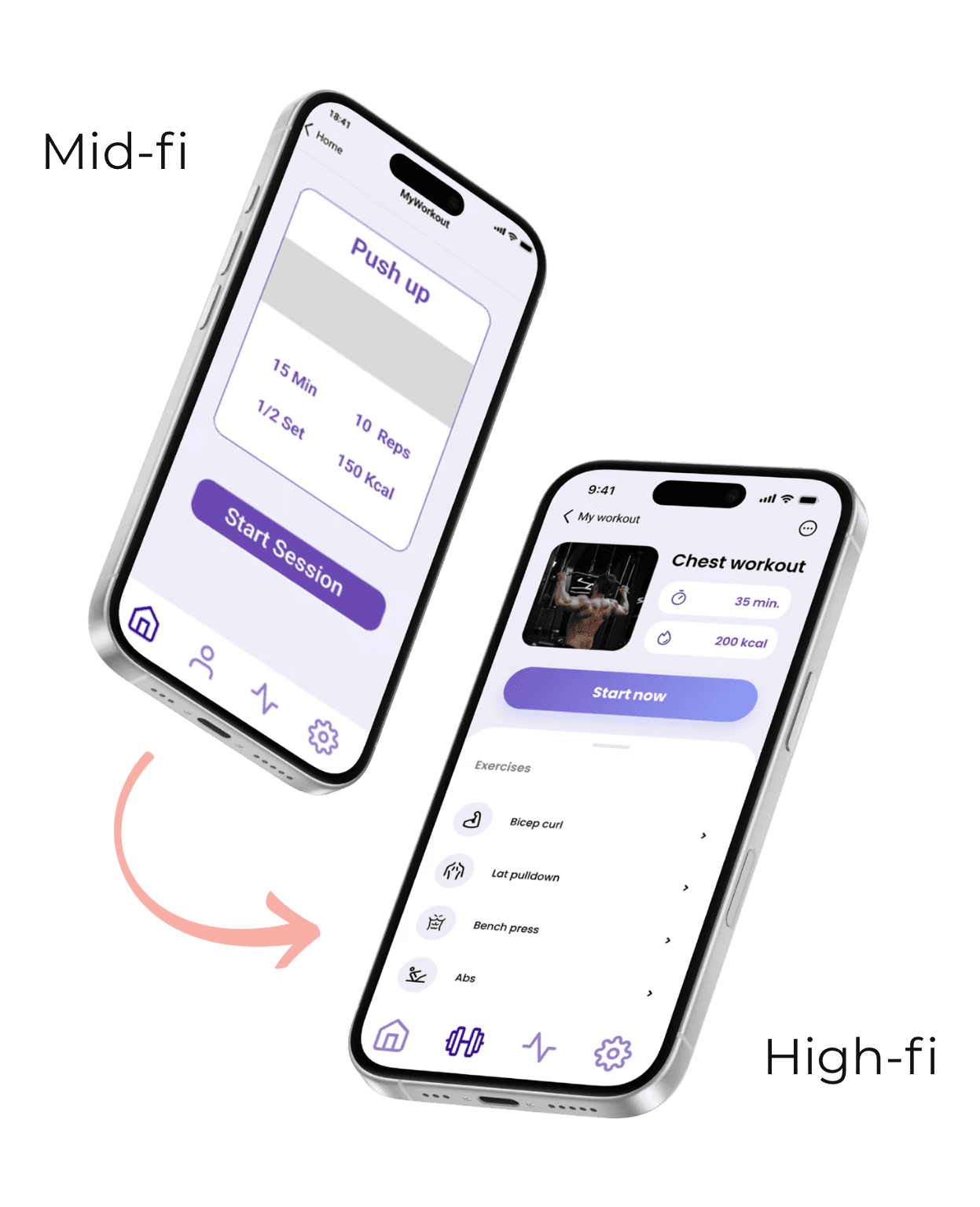
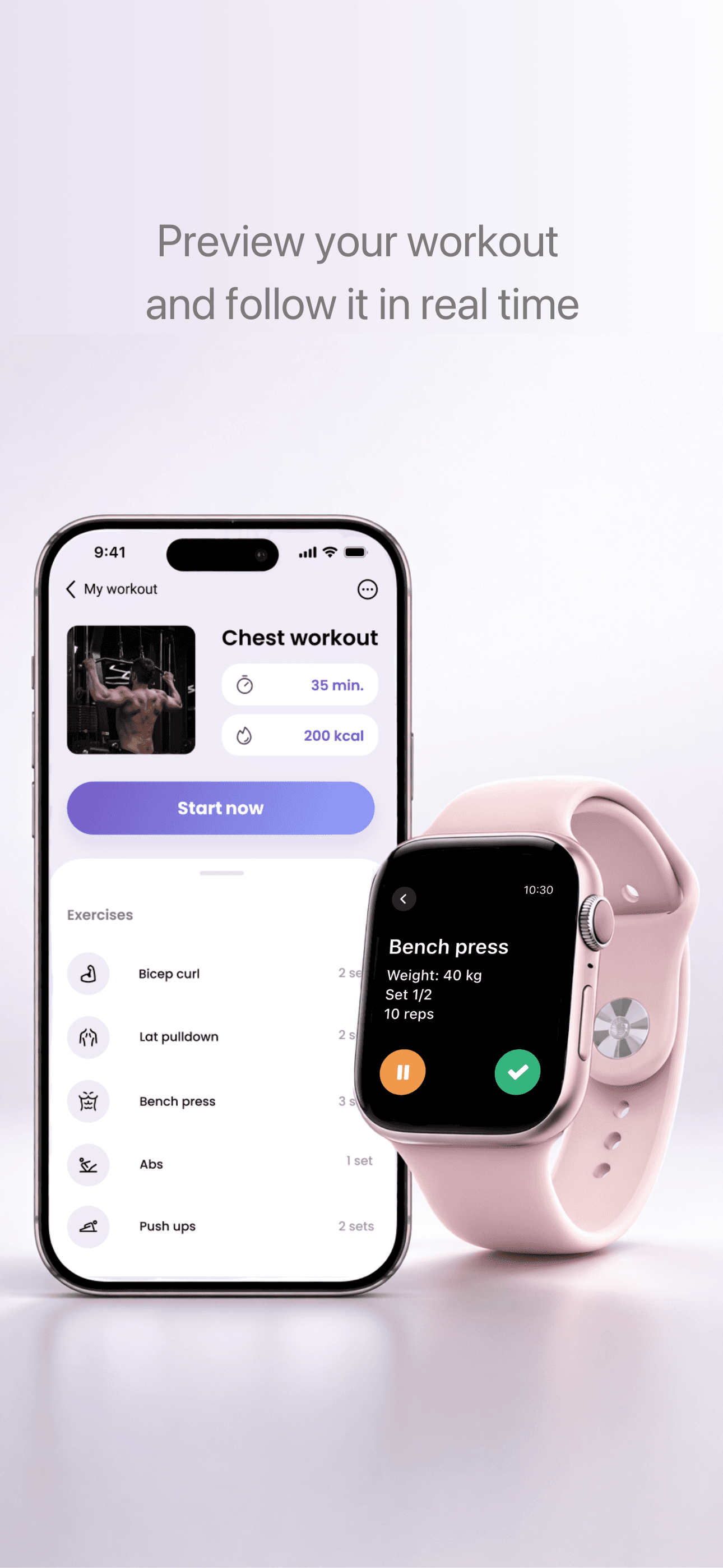
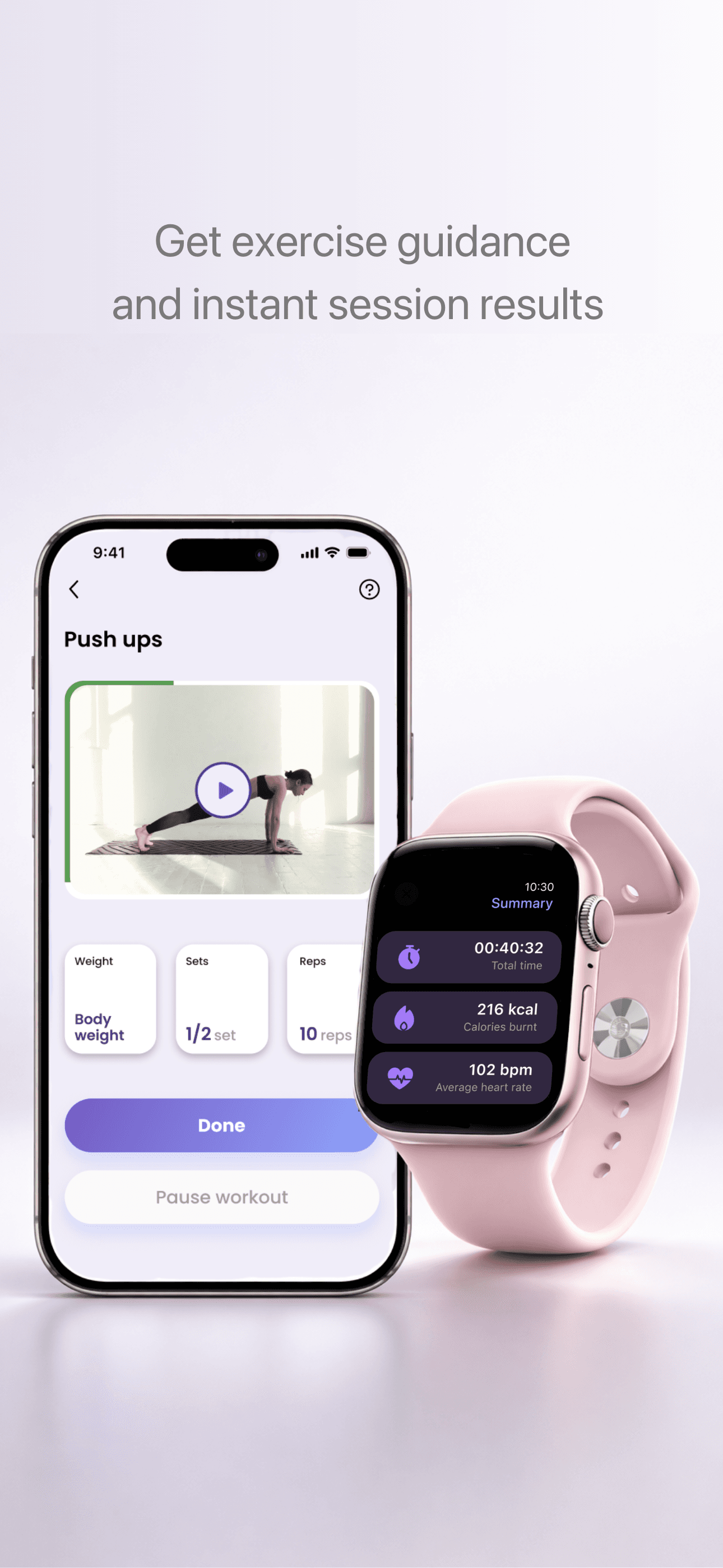
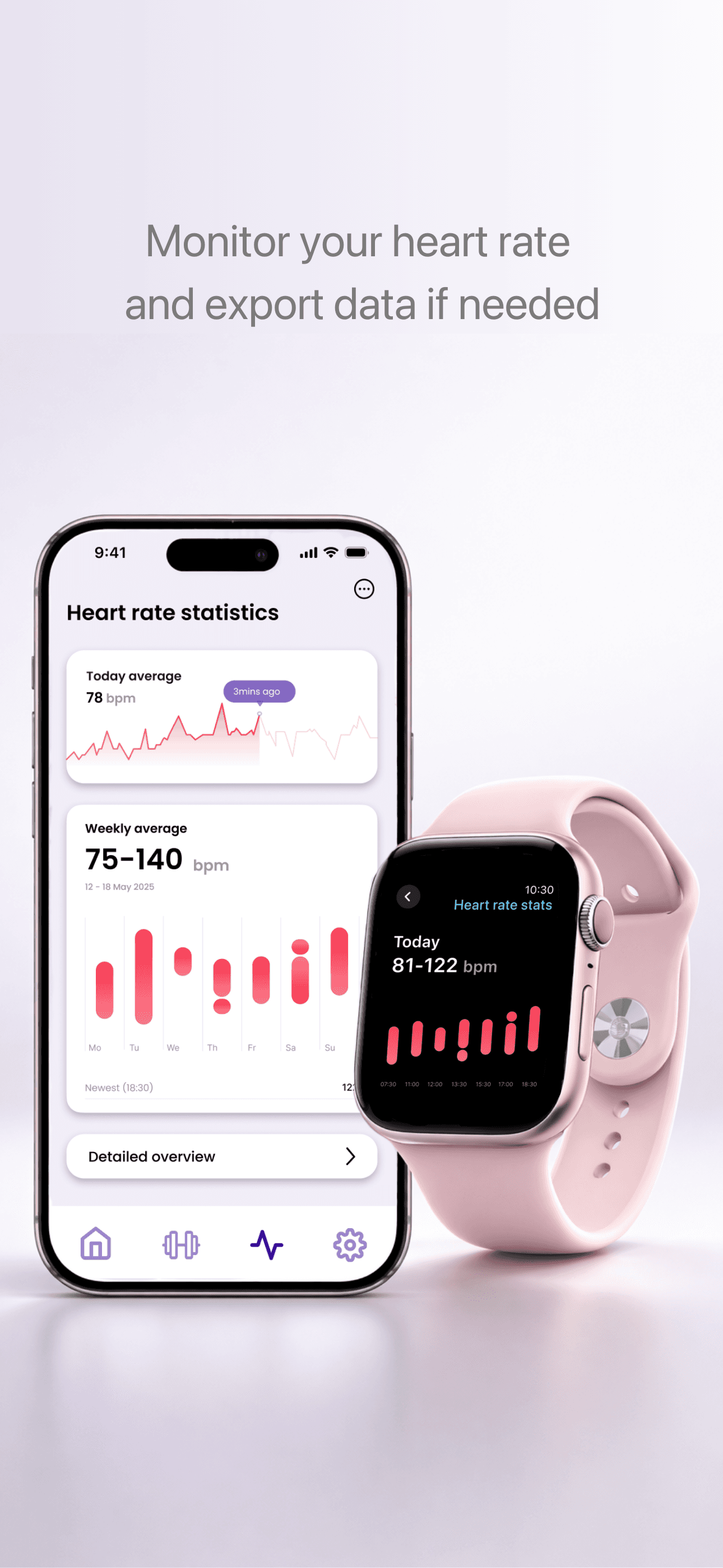
Low- and mid-fidelity prototypes helped us structure workouts and stats logically.
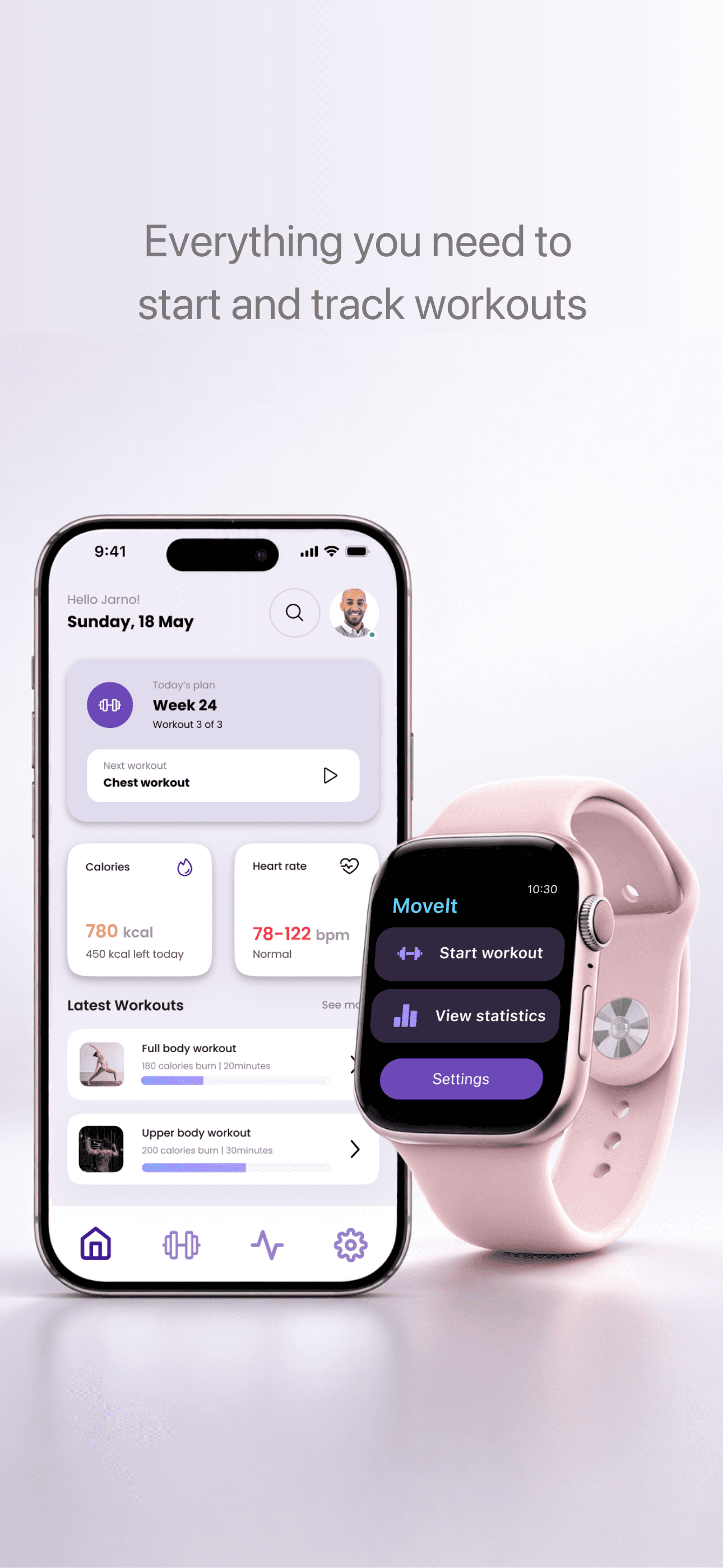
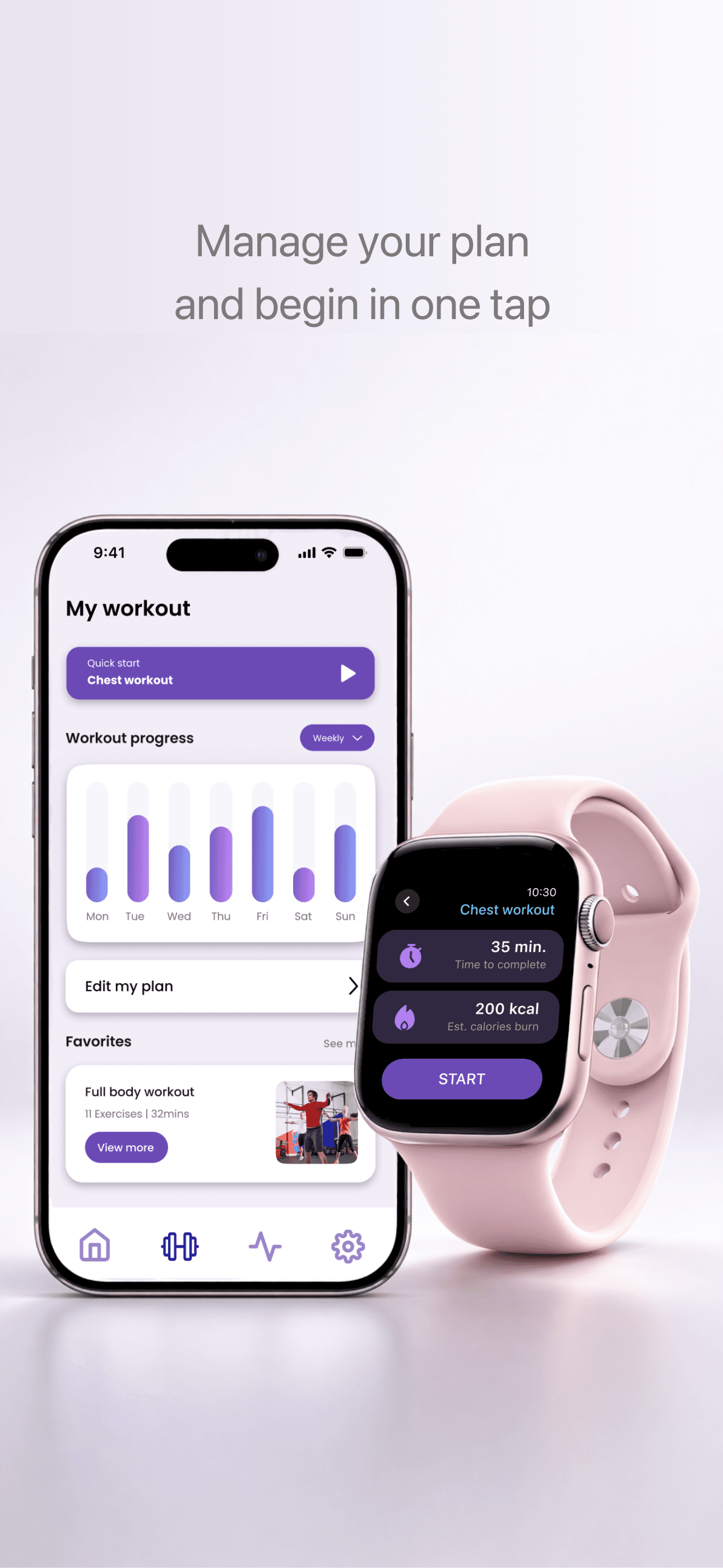
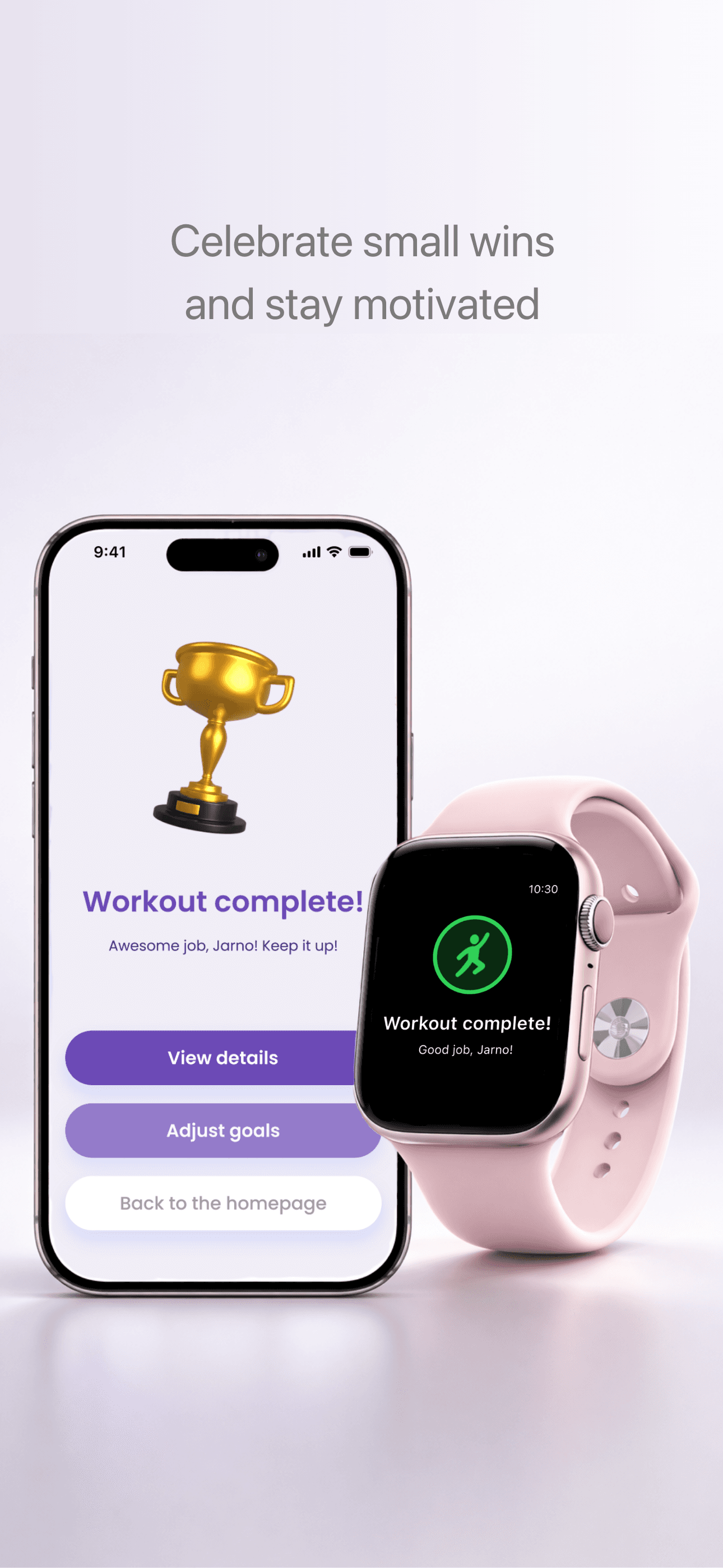
Through iterations in Figma, we developed a clean, accessible high-fidelity design for both platforms.
We prioritized accessibility and clarity, ensuring WCAG-compliant color pairings and large touch targets.
Final Design
Final Design
Reflection
Designing MoveIt taught me how to create a consistent experience across mobile and smartwatch platforms. Working with two devices pushed me to focus on simplicity and essential interactions (especially on the smaller smartwatch screen).
I learned a lot about usability and accessibility, like how to apply WCAG guidelines in a practical way. Collaborating with a colleague also improved my workflow, communication, successful time management and file organization across different tools.
The deadline was pretty strict, but I'm happy with what we did in only one week.
Areas for improvement
Areas for improvement
If I continued working on this project, I would:
Conduct real user testing with both mobile and smartwatch users
Refine the design based on feedbacks
Change alignment & spacing on mobile, button order
Adjust font sizes (currently too many different sizes)
Change bottom navigation bar on mobile
Improve prototype fidelity and motion to better simulate real interactions (like transitions, haptic feedback, gestures)
Explore personalized workout recommendations and clearer data visuals
Test synchronization between devices
Project handover in March 2025